Top publications

formation movement and destruction of coacervates by electricity

Nature Communications

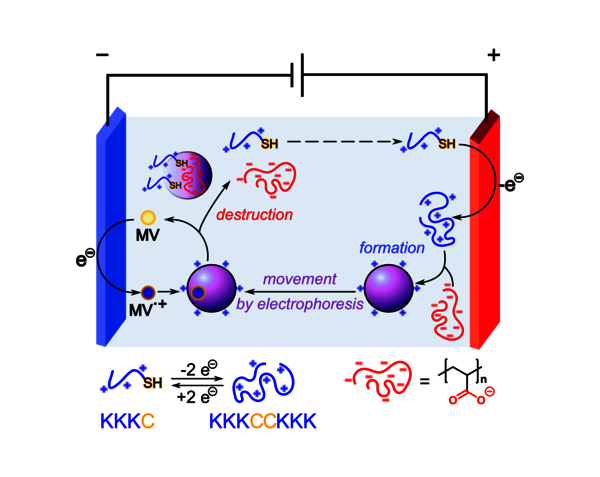
Abstract Transient compartmentalization and motion are fundamental to life, and milestones in the development of complex chemical systems. Coacervates have been proposed as compartments in this context, but efforts to drive them out-of-equilibrium use exergonic reactions, which are limited by waste…
porous pillared alloxazine-based MOFs

Chemistry of Materials

Abstract A modular one-pot three-component and mixed ligand strategy was used to synthesize metal–organic frameworks (MOFs) by combining Co and Zn metal salts with 2,6-naphthalenedicarboxylic acid (H2ndc) and a redox-active alloxazine-based ligand (1 or 2) under solvothermal conditions. Structural…

luminescence of metal-organic frameworks

Chemistry-A European Journal

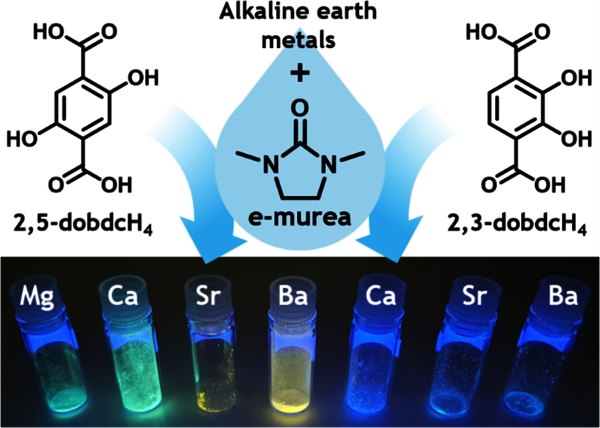
  Abstract The urothermal approach in 1,3-dimethylimidazolidin-2-one (e-murea) was employed for the successful preparation of a series of nine alkaline earth metal-organic frameworks (AE-MOFs) with two different dihydroxy terephthalic acid ligands (2,5-dobdcH4 and 2,3- dobdcH4; dobdcH4 =…

solvent-dependent chirality of circular helicates

Journal of the American Chemical Society

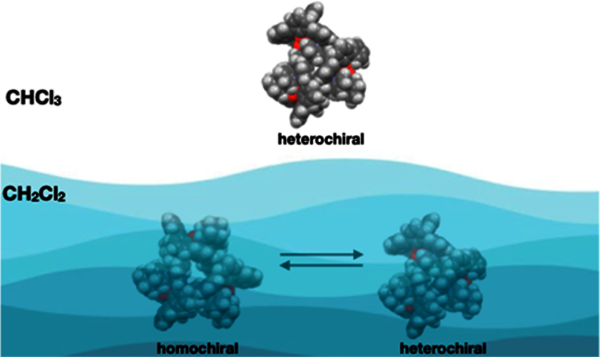
Abstract Circular trinuclear helicates have been synthetized from a bis-biphenol strand (LH4), titanium isopropoxide and various diimine ligands. These self-assembled architectures constructed around three TiO4N2 nodes have a heterochiral structure (C1 symmetry) when 2,2’-bipyridine…

synthesis of MOFs in enantiopure deep eutectic solvents

Green Chemistry

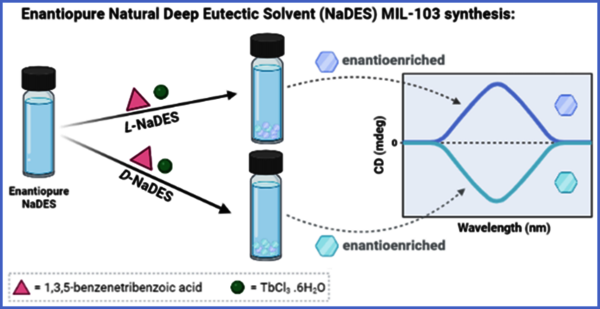
Abstract A green alternative approach for the chiral induction of a metal-organic framework (MOF) has been explored using the natural deep eutectic solvents (DES) proline:thymol (1:7) and menthol-thymol (1:1). These solvents have been successfully employed for the preparation of the MIL-103 MOF and…

doubly-locked binuclear copper complexes

Angewandte Chemie International Edition

Abstract Two binuclear heteroleptic CuI complexes, namely Cu−NIR1 and Cu−NIR2, bearing rigid chelating diphosphines and π-conjugated 2,5-di(pyridin-2-yl)thiazolo[5,4-d]thiazole as the bis-bidentate ligand are presented. The proposed dinuclearization strategy yields a large bathochromic shift of the…

gas absorption by coordination cages

Chemical Communications

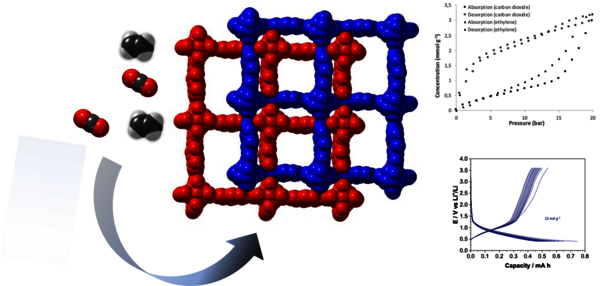
Abstract Giant octahedral M32 coordination cages were prepared via self-assembly of sulfonylcalix[4]arene-supported tetranuclear M(ii) clusters (M = Co, Ni) with hybrid linker based on tris(dipyrrinato)cobalt(iii) complexes appended with peripherical carboxylic groups. Due to intrinsic and…